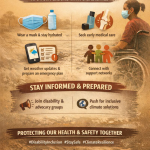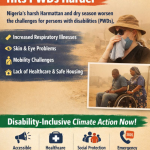
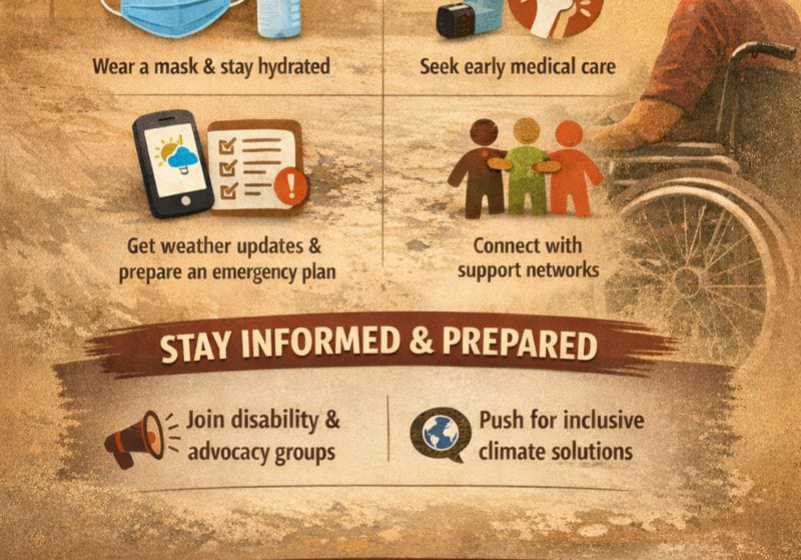
The Harmattan season, characterized by dry, dusty winds and cold mornings, poses serious challenges for persons with disabilities (PWDs). Climate resilience and adaptation during this period require intentional and inclusive actions to protect health, safety, and livelihoods. Dry air and dust can worsen asthma, respiratory conditions, eye irritation, skin dryness, and joint pain, especially for PWDs with pre-existing health conditions or albinism.
Adaptive measures include using face masks to reduce dust inhalation, staying hydrated, moisturizing skin, and ensuring access to warm clothing. Regular medical check-ups and availability of essential medications are crucial during this season. Homes, schools, and public spaces should be climate-resilient and accessible, with reduced dust exposure and proper ventilation.
Community awareness and support systems are vital, as well as disability-inclusive health and climate policies.
Prioritizing accessibility, preparedness, and inclusion, climate resilience efforts can reduce the Harmattan season’s impact and ensure the dignity, safety, and well-being of persons with disabilities.
#InclusiveClimateAction #ClimateResilience #HarmattanSeason #HealthAndSafety #AccessibleClimateInfo